


- Mac; MacBook Pro. The 8 Bit notes the likely reason that emulating Nintendo Switch games on M1 Macs is even possible and how an emulator could come to iOS. Developers have been.
- This video shows you how to setup flutter on your Apple MacBook Pro M1 with a few steps. You will also see how to run your apps on the iOS simulator as well.
- For now, the native version of Dolphin Emulator app for M1 is only available as a developer release. You can find more details about the early tests with Dolphin Emulator on M1 Macs here.
Many developers have experienced failures in building their react native applications through this macbook M1. However, don't worry, because I will share tips for you to deal with errors when building an iOS application on a MacBook Pro or MacBook Air M1 Apple Silicon chip. React Native Build Failed on Macbook Pro M1. From the announcement made on November 10th, 2020, users have had high hopes for the new Apple M1 devices. With its powerful Apple Silicon processor smashing benchmarks all over the place, users and developers were both asking if a native Dolphin build would be possible. Now we have the answer. Apple's M1 hardware is incredibly powerful and excels at running Dolphin.
I’ve never been a Mac guy.
My main gripe with Apple is that every Mac they release has a processor that’s about a generation behind. Then they have the audacity to charge the Apple tax. You typically pay 3x for a Mac what you’d pay for a PC with the exact same hardware.
Enter the M1 Mac Mini, Macbook Air, and Macbook Pro. These are entry-level Mac products that price/performance wise are actually semi-competitive with Windows machines at the same price-point. OK Apple, I’m listening.
But, can it run XCode quickly?
The M1 Chip is Very Powerful, Perfect For Developers Looking to Run XCode
I’m a software engineer, and in 2018 I wanted to try my hand at XCode development. I figured I’d buy the cheapest Mac Apple offered. This was the 2018 Mac Mini, which cost $800, and a multi-core GeekBench 5 score of 3203.
I was annoyed by that price/performance ratio, so I decided to build a Hackintosh. This Hackintosh had 16GB of RAM, a 512GB SSD, and an Intel Core i7 processor with a multi-core GeekBench 5 score of 5300. I built a machine that was twice as powerful as the top of the line 2018 Mac Mini, for $200 less than the base model. This machine is powerful; it has been fantastic for XCode development.
However, in 2020, Apple released a new M1 Mac Mini for only $700. My first thought was, “Can it compete with my Hackintosh.” And yes, not only can it compete, The M1 Mac Mini has a multi-core GeekBench 5 score of 7386. It blows my Hackintosh out of the water, and the base model is cost-competitive with my 2018 Hackintosh at only $700.
It’s quite impressive. The Hackintosh is officially dead (not just because you can’t buy Apple Silicon processors). I can no longer think of a great reason to build one over the M1 Mac Mini, or M1 Macbook Air. The best reason I can think of is Apple still gouges you if you want a 2TB hard drive. But, other than needing a beast of a machine the M1 Macs have the advantage. Bravo Apple.
Is 8GB of RAM Enough For XCode on the M1 Mac Mini, Macbook Air, and Macbook Pro?
This was the big question I had when I pulled the trigger and got the base M1 2020 Macbook Air. Was 8GB enough RAM to run the simulator without experiencing significant performance issues?
I know from my Hackintosh experience that a Mac can quickly get up over 8GB of RAM when running the XCode simulators. I rarely get my Mac up to 16GB of used RAM, but 8GB is pretty easy to surpass if you’re a developer with multiple tabs open. So I was very curious how much the 8GB model would slow down development.
If you’re curious too, I highly suggest you check out the YouTube video below from Max Tech. This guy went through and meticulously compared the performance of the 16GB model vs. the 8GB model while using tons of common apps.
The conclusion? Even if you edge up close to your 8GB of RAM limit, there’s not a massive drop in performance. He was experiencing things taking 10% longer on the 8GB model when he got around that limit. The integrated SSD’s of your Mac is fast to the point where a minor amount of swapping isn’t going to have a drastic effect on performance.
That said, this next guy is running Photoshop. He REALLY knows how to max out RAM on his machine. When you really give your Mac a task that takes significantly more than 8GB of RAM, you’ll notice a pretty substantial performance drop. It’s also worth a watch if you really want an in-depth example of this.
Personally, I’ll be forking over the extra $200 to get the 16GB model. But, I think unless you’re some type of power user, 8GB will be sufficient for you. The SSD Read speeds are so fast that you won’t notice a big performance drop unless you’re going WAY over the 8GB of RAM like in the Photoshop example above. There are probably very few use cases where that would ever happen.
There are people out there who are worried that swapping to your hard drive over and over could wear down your SSD. And if you intend to max out this machine 24/7 and still be running it in several years, I think that’s a valid concern.
For most developers and most people, I think you could easily get by with the 8GB model.
Do You Need To Run The XCode Simulator on the M1?
One of the cool things about the M1 Macs is that they can run iOS apps natively. This got me thinking, do I even need to debug my apps in the RAM hungry simulator anymore? Can I just run them straight from the Mac?… Yes!
There is a “run on Mac” destination for iOS apps in XCode, which will run the app natively on the machine, not in a simulator. It’s cool; you’ll lose simulator functionality like rotation, sleep, home button, etc. But, it’s now possible to avoid using a RAM hungry simulator when developing your apps on M1 devices.
Rosetta 2 Performance Vs. Native Apps
Not all software has an ARM based version of their app yet (like Final Cut Plugins) and you have to run it through the Rosetta 2 simulator.
This usually works rather well. But, there’s definitely a noticeable drop off in performance when comparing non-native apps to native apps on this machine.
This will become less of an issue over time as more companies compile their apps for the M1 chip. But, in the early days of a gen 1 product just keep in mind that there may be some issues.
Conclusion
The M1 Macs are powerful machines capable of XCode development at an OK price point. Well done Apple, I might have to consider becoming a Mac guy now.

From the announcement made on November 10th, 2020, users have had high hopes for the new Apple M1 devices. With its powerful Apple Silicon processor smashing benchmarks all over the place, users and developers were both asking if a native Dolphin build would be possible. Now we have the answer.
Apple's M1 hardware is incredibly powerful and excels at running Dolphin. This announcement has been in the works for some time, eagle eyed users may have noticed that earlier this month macOS builds were now being designated as 'Intel'. That's because delroth and Skyler had set up a new buildbot using a service called MacStadium for creating Universal macOS binaries. These builds are available immediately and natively support both macOS M1 and Intel macOS devices.
Tackling macOS on ARM
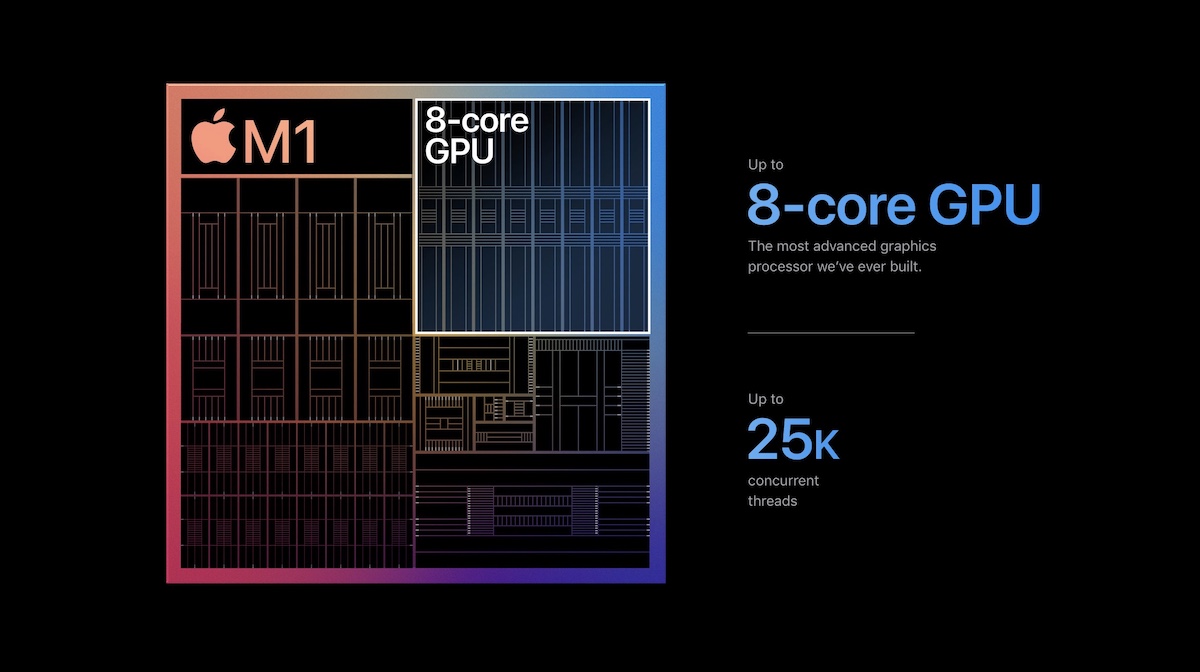
It is an understatement to say that Apple dropped a bomb on the PC industry with the M1 ARM processor. ARM is a Reduced Instruction Set Computing (RISC) architecture that was specifically designed for efficiency with portable devices. With a tight instruction set instead of the ever ballooning mess that is x86, ARM was able to get away with literally less processor while performing optimized tasks, giving it exceptional power efficiency. However given unoptimized workloads, an ARM processor would need many more cycles to perform it than an x86 CPU. All combined, ARM was the processor of choice for battery life in portable devices, but when pushed they had poor overall performance compared to Intel's x86 processors. It was a processor for casual things like phones, and not really meant for 'real work'. But that is the past.
Intel's iron grip of process superiority has long slipped, and the ARM instruction set has carefully expanded to more efficiently handle more tasks while not sacrificing power efficiency. Yet even with ARM reaching datacenters and even some interesting hardware giving us a glimpse at what could be, ARM's reputation as being weaker than x86 has remained firmly entrenched.
:no_upscale()/cdn.vox-cdn.com/uploads/chorus_asset/file/22051544/Screen_Shot_2020_11_18_at_3.17.59_PM.png "Android")
But with M1, Apple has completely shattered this foolish notion. Not only can the M1 perform the same tasks as their former Intel processors, they can do it faster even when using their Rosetta 2 translation layer! All of this while still providing considerably better single threaded performance compared to Intel. Let's just say they had gotten our attention.
We immediately put it through its paces. Using the Rosetta 2 translation layer with Dolphin's x86-64 JIT, the M1 easily ran most games at full speed and handily outran like-class Intel Macs. The experience wasn't entirely smooth due to jitter from Jitting a JIT, yet the processor proved itself more than capable of handling Dolphin. But the fact it had to do it through a translation layer was a huge performance bottleneck. Developers thought, why not just use Dolphin's AArch64 JIT for native support? And thus, the race was on as several people tried to figure out the hurdles of getting Dolphin's AArch64 JIT to run on the M1.
Unfortunately, getting the AArch64 JIT to work wasn't exactly trivial. Apple requires W^X (Write Xor Execute) conformance for native macOS M1 applications. What it does is make it so that areas of memory must be explicitly marked as for WriteorExecute, but not both! Because it's easier and hasn't been forbidden on any of the prior platforms that Dolphin supports, the emulator previously just marked memory regions used by the JIT as for WriteandExecute. This requirement from Apple is mostly a security feature to prevent bugs in programs that read untrusted data from being exploited to run malware. Outside of emulators, the primary place that you'll actually see self-modifying code is web browsers, which is often a vector for attack on a computer.
This was thankfully a lot less strict than on iOS devices, which strictly forbid mapping memory as executable whatsoever and made iOS untenable for us to officially support. Apple even provides documentation for helping developers port JITs to macOS on ARM. Skyler used a method described in the documentation that would change the mapped memory between Writeable when emitting code to Executable when executing code. Since Dolphin wasn't designed for this, there were a few hiccups along the way, but eventually everything was massaged into working with the new restrictions.
Once that was out of the way, the focus shifted towards maintainability and setting up the infrastructure. Beyond getting it to run correctly, this was by far the hardest challenge to official M1 support. Dolphin's infrastructure is rather complicated and sensitive to changes. Moving macOS builds over to a universal binary (x86-64 and AArch64 all in one) along with getting the hardware necessary to build macOS universal binaries was a challenge and could have proven to be an expensive endeavor. In the end, MacStadium made the move extremely inexpensive by providing us with free access to M1 hardware, so we were able to focus on making Dolphin's buildbot infrastructure handle the new builds.
Putting the M1 Hardware To The Test
So now that it runs, you're probably wondering how does it run. There's a few things we need to keep in mind. Dolphin's AArch64 JIT isn't quite as mature as the x86-64 JIT. While things aren't as bad as they were a couple of years ago and compatibility should be roughly the same thanks to efforts from JosJuice, it is still the less complete of the two JITs.
One of the differences is instruction coverage. Any PowerPC instruction that isn't included in the JIT has to fallback to interpreter, which costs a huge performance penalty. Most common instructions are covered by both JITs at this point. There is one important feature missing in the AArch64 Jit, though: memchecks. Thankfully, this only affects Full MMU games such as Star Wars Rogue Squadron II, III, and Spider-Man 2. There are some niceties missing from AArch64 JIT, too, like JitCache space reuse used to prevent spurious JitCache flushes.
AArch64 does have its advantages, though. Namely, the processors have 31 registers, compared to the 16 available in x86-64 processors. The PowerPC processor we are emulating has 32 registers, and while it is rare for all of them to be used within a single code block, more registers is always nice to have. Another difference is that AArch64 and PowerPC have 3 operand instructions while x86-64 only has two.
Ios Emulator Mac M1 Software
As you can see, it makes emulating some instructions much cleaner and easier than on our x86-64 JIT. Alright, enough with the boring details. How does the M1 hardware perform when put up against some of the beasts of the GameCube and Wii library? We also included data from two computers featured in Progress Reports previously for comparison.
There's no denying it; macOS M1 hardware kicks some serious ass. It absolutely obliterates a two and a half year old Intel MacBook Pro that was over three times its price all while keeping within ARM's reach of a powerful desktop computer. We were so impressed, we decided to make a second graph to express it.
The efficiency is almost literally off the chart. Compared to an absolute monstrosity of a Desktop PC, it uses less than 1/10th of the energy while providing ~65% of the performance. And the poor Intel MacBook Pro just can't compare.
Taking Things a (Lock)Step Further
After doing strenuous performance testing on the macOS M1 and its Apple Silicon, it was clear that it was powerful. The problem is that if you give developers a new toy, they eventually decide to push things further and further. This was the first time we got to see Dolphin's AArch64 JIT really stretch its legs on something other than a phone or tablet with an ultra aggressive governor that's also limited by graphics drivers. What is the absolute worst idea that we could come up with given this new found power? Netplay.
This was the real test to see if the AArch64 JIT and x86-64 JIT truly equals. We couldn't exactly test this before because the Android GUI lacks netplay support, but macOS runs the desktop version with no compromises. That includes having full netplay support. Now, testing this was mostly a joke because there are tons of differences between the JITs. Everything from instruction coverage to known rounding errors. The chances of this working was next to zero. But there was no reason to stop and think if we should - technology had made it so we could.
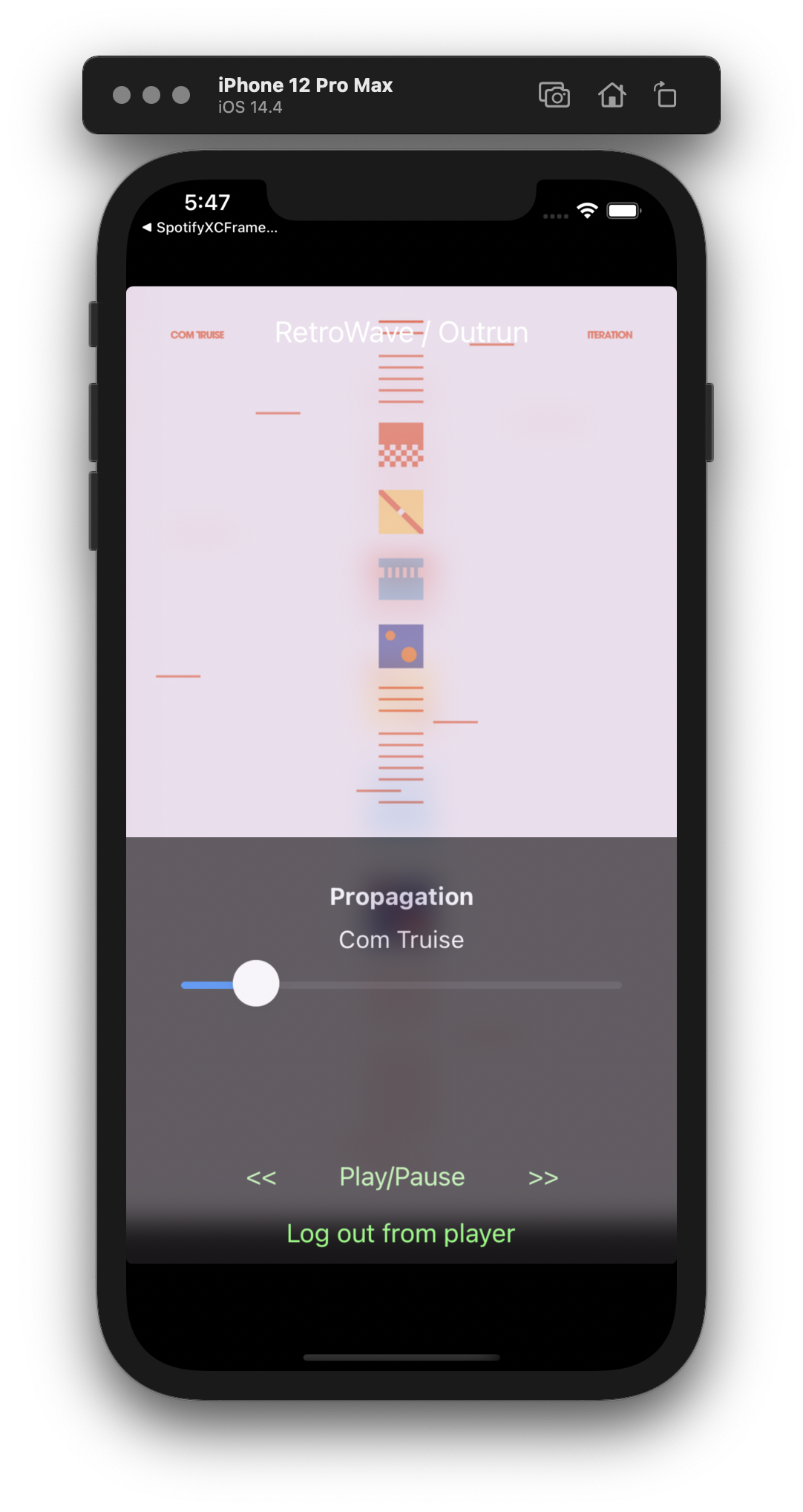
Ios Emulator Mac M1 Pro
And it actually worked! We just can't be certain exactly how well yet due to limited testing. Every single game we've tested on netplay so far has managed to synchronize, albeit with Dolphin's desync checker giving a false positive. Testers have tried everything from Super Smash Bros. Melee and Mario Party 5 to things like spectating The Legend of Zelda: The Wind Waker. All of the sessions stayed in sync.
This might not be true for all games. Up until earlier this month, games like Mario Kart: Double Dash!!, F-Zero GX, and Mario Kart Wii would immediately desync due to physics differences. Thanks to the work of JosJuice, those rounding bugs in the AArch64 JIT and interpreter (...we'll get to that in the Progress Report) are now fixed, meaning these games should at least have a chance to sync on netplay.
Because of limited libraries, we don't have a great idea of what games will work and what games are problematic. As a stress test, Techjar and Skyler played the Super Mario Sunshine Co-op Mod. The physics calculations in Super Mario Sunshine are extremely sensitive to CPU rounding bugs and it provided a tough test for both JITs. Oh yeah, they also enabled the 60 FPS hack just to make things even more interesting.
Mac M1 Android Studio
Everyone knowledgeable on Dolphin's JITs thought that cross-JIT netplay would be impossible, at least without tons of dedicated fixes. Yet here we are, able to experience it first hand. And it can only get better from here, as we are now able to monitor and test JIT determinism on netplay. While you might be excited to dive right in, it's important to note that we were only able to test a few games and we have no idea what compatibility will look like when unleashed on the wider library.
Ios Emulator Mac M1 Online
Note:Yes, we're aware that Windows and Linux AArch64 devices existed before the M1. There was no allure to testing netplay on those because they could not run Dolphin reasonably. We really didn't expect this to work or we probably would have tried it sooner.
In Conclusion
There's little else we can say: The M1 hardware is fantastic and higher tiers are on the way promising even better performance. But what we have is already efficient, powerful, and gives us a mainstream AArch64 device that isn't Android and uses our AArch64 JIT to its fullest potential. The only big downside is the proprietary graphics API present in macOS that prevents us from using the latest versions of OpenGL and forces us to use MoltenVK in order to take advantage of Vulkan. That is a very small price to pay to get a glimpse at some really cool hardware that redefines what an ARM processor can do. There's undeniable excitement for the next generation of AArch64 hardware to see how much further that this can go.
Android Studio Apple M1 Emulator
EDITORS NOTE: A small error was noticed in our 9900k performance testing. This has been corrected. However, the differences are very minor and do not affect our conclusion.